




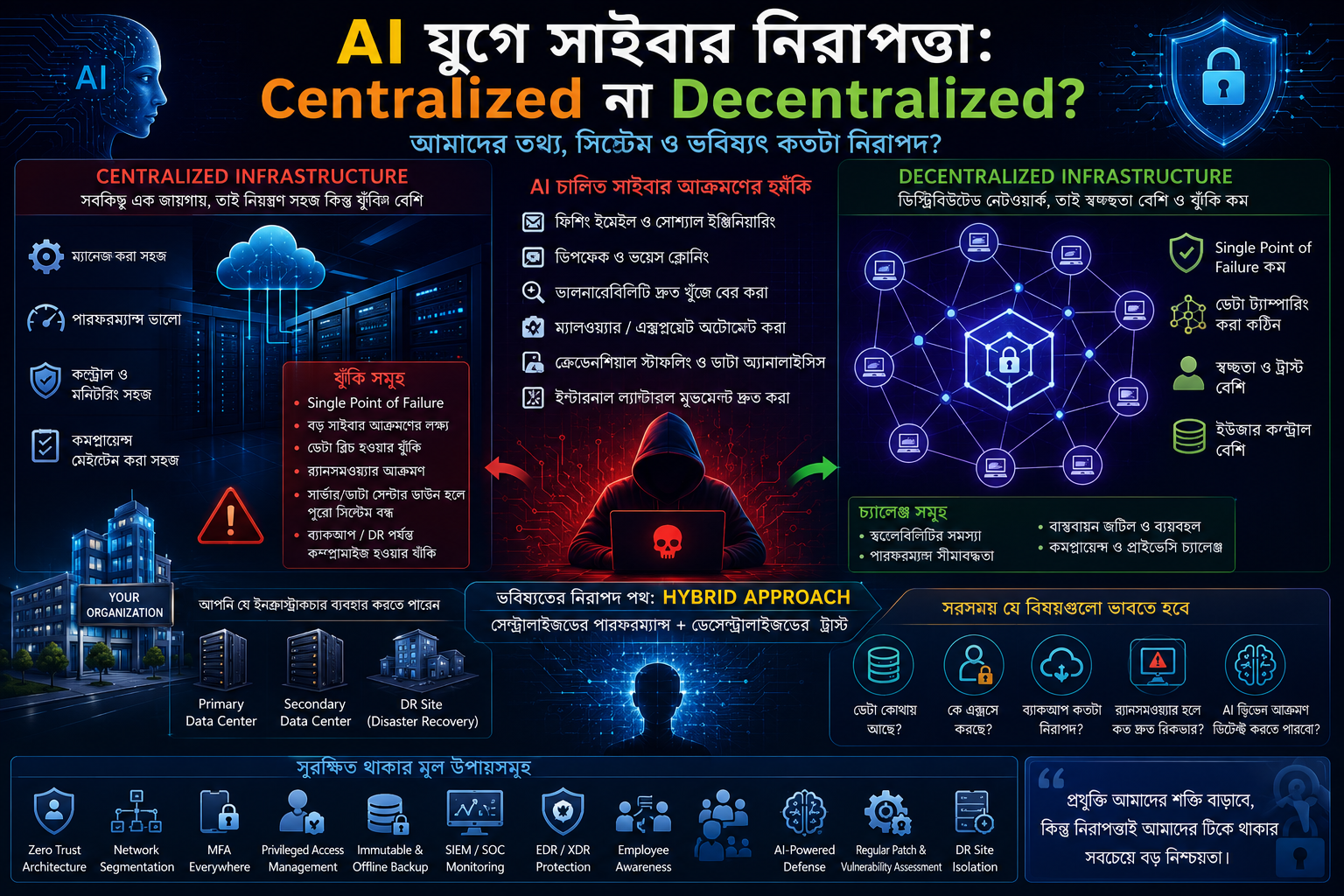
AI যুগে সাইবার নিরাপত্তা: Centralized না Decentralized?
আজ Google I/O 2026 নিয়ে একটি পোস্ট পড়ছিলাম, যেখানে Google তাদের Gemini AI ecosystem, AI Agent, Gemini Spark, TPU infrastructure এবং 24/7 autonomous AI assistant নিয়ে আলোচনা করেছে।
পোস্টটি পড়ার পর আমার মাথায় একটি গুরুত্বপূর্ণ প্রশ্ন আসে:
AI যত powerful হচ্ছে, future cybersecurity কতটা challenging হবে?
আমরা এখন এমন এক সময়ের দিকে যাচ্ছি যেখানে AI শুধু প্রশ্নের উত্তর দেবে না, বরং মানুষের হয়ে কাজ করবে। AI এখন ধীরে ধীরে agentic system-এ পরিণত হচ্ছে।
অর্থাৎ AI:
- Tool ব্যবহার করতে পারবে
- Browser চালাতে পারবে
- Email ও calendar manage করতে পারবে
- Long-running task background-এ execute করতে পারবে
- Different system-এর সাথে integrate হয়ে action নিতে পারবে
- User-এর instruction অনুযায়ী decision support দিতে পারবে
এটা technology-এর জন্য অনেক বড় advancement। কিন্তু একই সাথে এটি cybersecurity-এর জন্য নতুন ধরনের risk তৈরি করবে।
AI Agent কী এবং কেন এটা গুরুত্বপূর্ণ?
AI Agent হলো এমন একটি intelligent system, যা শুধু text generate করে না; বরং নির্দিষ্ট goal achieve করার জন্য step-by-step কাজ করতে পারে।
যেমন:
- “আমার জন্য report তৈরি করো”
- “এই email thread summarize করো”
- “এই customer complaint analyze করো”
- “এই data থেকে insight বের করো”
- “আমার calendar দেখে meeting schedule করো”
- “এই website থেকে তথ্য নিয়ে comparison তৈরি করো”
এ ধরনের কাজ করার জন্য AI agent-কে অনেক সময় বিভিন্ন tool, API, browser, file, database বা application access করতে হয়।
এখানেই security concern তৈরি হয়।
কারণ কোনো AI system যদি sensitive system-এর access পায়, তাহলে সেই access secure না হলে attacker সেটাকে misuse করতে পারে।
AI-driven Cyber Attack কেন বড় Threat হতে পারে?
আগামী দিনে AI-driven cyber attack বা AI চালিত hacking বড় threat হয়ে উঠতে পারে। কারণ AI attacker-দের কাজকে আরও দ্রুত, automated এবং intelligent করে তুলতে পারে।
আগে একজন attacker-কে manually অনেক কাজ করতে হতো। যেমন:
- Target research
- Email crafting
- Vulnerability scanning
- Password guessing
- Malware customization
- Network mapping
- Data analysis
কিন্তু AI এসব কাজের অনেক অংশ automate করতে পারে।
AI দিয়ে কী ধরনের Cyber Attack হতে পারে?
1. Realistic Phishing Email বা Message তৈরি
আগে phishing email অনেক সময় সহজে ধরা যেত, কারণ ভাষা ভুল থাকত বা message suspicious মনে হতো।
কিন্তু AI ব্যবহার করে attacker খুব natural, professional এবং context-aware phishing email তৈরি করতে পারে।
উদাহরণ:
- HR-এর নামে fake email
- Bank-এর নামে fake notice
- IT support-এর নামে password reset request
- Management-এর নামে urgent approval message
- Vendor বা partner-এর নামে invoice email
এগুলো এত real মনে হতে পারে যে সাধারণ user সহজে বুঝতেই পারবে না।
2. Deepfake Voice ও Video দিয়ে Social Engineering
AI দিয়ে এখন voice clone এবং deepfake video তৈরি করা সম্ভব।
এতে attacker:
- CEO-এর voice imitate করতে পারে
- Manager-এর fake video call তৈরি করতে পারে
- IT admin সেজে instruction দিতে পারে
- পরিচিত কারো voice ব্যবহার করে sensitive information চাইতে পারে
এটা future social engineering attack-কে অনেক বেশি dangerous করে তুলবে।
3. Vulnerability দ্রুত খুঁজে বের করা
AI code, configuration, API endpoint বা public-facing system analyze করে দ্রুত weakness খুঁজে বের করতে পারে।
যেমন:
- Misconfigured server
- Exposed API key
- Weak authentication
- Outdated software
- Unsecured database
- Open port
- Vulnerable web application
একজন attacker AI ব্যবহার করে অনেক দ্রুত attack surface বুঝতে পারবে।
4. Malware বা Suspicious Script Automate করা
AI দিয়ে malware তৈরি করা, modify করা বা obfuscate করা সহজ হতে পারে।
এর ফলে malware:
- Signature-based antivirus bypass করতে পারে
- Different environment অনুযায়ী behavior change করতে পারে
- Detection এড়ানোর চেষ্টা করতে পারে
- Automatedভাবে target system analyze করতে পারে
এই কারণে traditional antivirus একা future threat ঠেকানোর জন্য যথেষ্ট নাও হতে পারে।
5. Credential Attack আরও Smart হতে পারে
AI leaked password, user behavior, naming pattern, organization structure এবং public information analyze করে smarter credential attack চালাতে পারে।
যেমন:
- Password pattern guess করা
- Employee email format identify করা
- LinkedIn data থেকে target selection
- Reused password detect করা
- Credential stuffing automate করা
6. Lateral Movement দ্রুত হতে পারে
একবার attacker কোনো network-এ ঢুকে গেলে, AI তাকে দ্রুত বুঝতে সাহায্য করতে পারে:
- কোন server critical
- কোন user privileged
- কোন database valuable
- কোন backup system exposed
- কোন route দিয়ে অন্য system-এ যাওয়া যায়
এটাকে lateral movement বলা হয়।
AI-এর কারণে এই process অনেক দ্রুত হতে পারে।
Centralized Infrastructure নিয়ে Concern কেন?
এই কারণেই centralized infrastructure নিয়ে নতুন করে ভাবা দরকার।
Centralized cloud বা centralized data center system মানে হলো data, application, processing power এবং control একটি নির্দিষ্ট organization, cloud provider বা limited infrastructure-এর অধীনে থাকে।
Public cloud যেমন:
- AWS
- Google Cloud
- Microsoft Azure
- Google infrastructure
- Meta infrastructure
এগুলো centralized infrastructure-এর উদাহরণ।
আবার কোনো organization যদি cloud ব্যবহার না করে নিজের office বা private location-এ server রাখে, সেটাও centralized infrastructure — যদিও সেটি on-premise private setup।
On-Premise Data Center কি Centralized?
হ্যাঁ।
কোনো organization যদি নিজের office বা private data center-এ server রাখে, যেমন:
- Primary Data Center
- Secondary Data Center
- Disaster Recovery Site
তাহলে সেটি cloud না হলেও centralized infrastructure-এর মধ্যে পড়ে।
কারণ:
- Control একটি organization-এর হাতে
- Data limited infrastructure-এর মধ্যে থাকে
- Central admin team manage করে
- Access control centralized
- Identity system centralized হতে পারে
- Core application ও database নির্দিষ্ট server/site-এ থাকে
তবে যদি 2 DC এবং 1 DR থাকে, তাহলে সেটি simple centralized system না।
এটাকে বলা যেতে পারে:
Private On-Premise Centralized Infrastructure with High Availability and Disaster Recovery Architecture
Centralized System-এর সুবিধা
Centralized system খারাপ — এমন নয়। এর অনেক practical সুবিধা আছে।
1. Manage করা সহজ
সব system centralizedভাবে manage করা যায়।
Monitoring, patching, backup, access control — সব একটি defined process-এর মধ্যে থাকে।
2. Performance ভালো
Centralized data center বা cloud infrastructure high-performance hardware, storage, networking এবং compute resource ব্যবহার করতে পারে।
3. Control বেশি
Organization নিজের policy অনুযায়ী:
- Access control
- Firewall rule
- Backup policy
- Data retention
- Compliance
- Monitoring
সব manage করতে পারে।
4. Compliance maintain করা সহজ
Financial institution, bank, NGO, telecom বা government organization-এর ক্ষেত্রে compliance খুব গুরুত্বপূর্ণ।
Centralized infrastructure-এ audit, logging, access review এবং policy enforcement তুলনামূলকভাবে সহজ হতে পারে।
5. Monitoring সহজ
Centralized environment-এ log collection, SIEM integration এবং incident monitoring easier হয়।
Centralized System-এর Risk
তবে centralized system-এর বড় risk আছে।
সবচেয়ে বড় risk হলো:
Single Point of Failure
অর্থাৎ system-এর কোনো critical component fail বা compromise হলে পুরো organization impact হতে পারে।
যেমন:
- Core database compromise
- Identity system compromise
- Active Directory compromise
- Firewall misconfiguration
- Backup server encrypted
- Storage failure
- Primary data center down
- DR replication corrupted
- Admin account compromised
Successful Cyber Attack হলে কী হতে পারে?
একটি successful cyber attack organization-এর জন্য অনেক বড় damage তৈরি করতে পারে।
Possible Impact:
- Customer data leak
- Financial information exposure
- Ransomware attack
- Service downtime
- Backup corruption
- DR site compromise
- Internal document leak
- Business operation বন্ধ হয়ে যাওয়া
- Reputation damage
- Legal penalty
- Compliance issue
- Customer trust loss
তাই শুধু cloud ব্যবহার না করলেই secure — এমন না।
আবার cloud ব্যবহার করলেই insecure — এটাও না।
মূল বিষয় হলো:
Security depends on architecture, segmentation, monitoring, access control, backup, recovery capability and people awareness.
Future Cybersecurity-এর জন্য গুরুত্বপূর্ণ বিষয়
আমার মতে future cybersecurity-এর জন্য কিছু বিষয় খুব গুরুত্বপূর্ণ।
1. Zero Trust Architecture
আগে অনেক organization মনে করত internal network মানেই trusted।
কিন্তু modern cybersecurity-তে এই ধারণা risky।
Zero Trust Architecture-এর মূল কথা:
Never trust, always verify.
অর্থাৎ:
- User verify করতে হবে
- Device verify করতে হবে
- Location verify করতে হবে
- Access permission verify করতে হবে
- Application behavior verify করতে হবে
- Every request validate করতে হবে
Internal network-এর user হলেও তাকে automatically trusted ধরে নেওয়া যাবে না।
2. Network Segmentation
সব server, user এবং application একই network-এ রাখা উচিত না।
আলাদা zone করা দরকার:
- Database zone
- Application zone
- Web server zone
- Employee PC zone
- Backup zone
- DR replication zone
- Management zone
- Internet-facing zone
Network segmentation থাকলে attacker এক জায়গায় ঢুকলেও সহজে পুরো network compromise করতে পারবে না।
3. MFA Everywhere
Password alone এখন আর safe না।
MFA থাকা উচিত:
- VPN login
- Admin login
- Firewall access
- Server access
- Database access
- Backup console
- Cloud console
- Email admin panel
- Remote access system
MFA attacker-এর credential theft attack অনেক কঠিন করে দেয়।
4. Privileged Access Management
সবচেয়ে dangerous account হলো privileged account।
যেমন:
- Domain Admin
- Database Admin
- Firewall Admin
- Backup Admin
- Hypervisor Admin
- Application Admin
এই accounts compromise হলে পুরো system risk-এ পড়ে।
তাই দরকার:
- Least privilege access
- Just-in-time access
- Admin session monitoring
- Separate admin account
- Strong password policy
- MFA
- Regular access review
5. Immutable & Offline Backup
Backup cybersecurity-এর সবচেয়ে গুরুত্বপূর্ণ অংশগুলোর একটি।
কিন্তু backup যদি same network-এ always online থাকে, তাহলে ransomware সেটাও encrypt করতে পারে।
তাই দরকার:
- Offline backup
- Immutable backup
- Offsite backup
- Air-gapped backup
- Regular restore test
একটি ভালো rule হলো:
3-2-1 Backup Strategy
মানে:
- 3 copies of data
- 2 different storage media
- 1 copy offsite/offline
6. SIEM/SOC Monitoring
Security শুধু prevention না। Detection-ও equally important।
SIEM/SOC monitoring দিয়ে detect করা যায়:
- Suspicious login
- Failed login pattern
- Privilege escalation
- Lateral movement
- Malware behavior
- Data exfiltration attempt
- Unusual admin activity
- Suspicious network traffic
Future attack দ্রুত হবে। তাই detection system-ও real-time হওয়া দরকার।
7. DR Site Isolation
Disaster Recovery site শুধু backup copy না।
DR site হলো business continuity-এর শেষ ভরসা।
কিন্তু অনেক সময় primary site compromise হলে DR site-ও compromise হয়ে যায়, কারণ:
- Same credential use হয়
- Same network trust থাকে
- Same domain dependency থাকে
- Same backup account থাকে
- Replication unchecked থাকে
তাই DR site আলাদা security boundary হওয়া দরকার।
DR site-এ থাকা উচিত:
- Separate access control
- Separate admin credential
- Isolated network
- Secure replication
- Regular failover drill
- Ransomware-safe backup copy
8. Employee Awareness
Cybersecurity শুধু technology দিয়ে হয় না। মানুষও security chain-এর অংশ।
অনেক attack শুরু হয়:
- Phishing email
- Fake link
- Malicious attachment
- Weak password
- Social engineering
- USB device
- Fake IT support call
তাই employee training জরুরি।
Training topic হতে পারে:
- Phishing detection
- Password hygiene
- MFA importance
- Sensitive data handling
- Incident reporting
- Social engineering awareness
9. AI-based Defense
যেহেতু future attack AI-powered হতে পারে, defense system-ও AI-assisted হওয়া দরকার।
AI defense সাহায্য করতে পারে:
- Anomaly detection
- User behavior analytics
- Automated threat detection
- Suspicious pattern identification
- Faster incident response
- Log correlation
- Malware behavior analysis
আগামী দিনের cybersecurity হবে:
AI Attack vs AI Defense
Decentralized System কি Solution?
এখন প্রশ্ন হলো:
Decentralized system কি solution?
Decentralized system-এ data/control এক জায়গায় থাকে না।
Multiple node বা distributed network-এর মাধ্যমে verification হয়।
উদাহরণ:
- Blockchain
- Decentralized identity
- Distributed storage
- On-chain verification
- Peer-to-peer network
Decentralized System-এর সুবিধা
Decentralized architecture কিছু ক্ষেত্রে centralized risk কমাতে পারে।
1. Single Point of Failure কম
একটি node fail করলেও পুরো system বন্ধ হয় না।
2. Data Tampering কঠিন
Blockchain বা distributed ledger-এ record পরিবর্তন করা কঠিন।
3. Transparency বেশি
Transaction বা verification process publicly বা cryptographically verify করা যায়।
4. User Control বেশি
Decentralized identity বা wallet-based access user control বাড়াতে পারে।
5. Trustless Verification
কোনো single authority-এর উপর পুরো trust না করেও verification করা যায়।
Decentralized System-এর Challenge
তবে decentralized system perfect solution না।
এরও challenge আছে:
- Scalability issue
- Performance limitation
- High cost
- Compliance complexity
- Privacy challenge
- Enterprise adoption difficulty
- Key management risk
- Governance issue
- User experience complexity
Enterprise environment-এ সব data on-chain রাখা practical নয়। Sensitive data public blockchain-এ রাখা privacy ও compliance risk তৈরি করতে পারে।
তাহলে Future কী?
আমার মতে future পুরোপুরি centralized বা পুরোপুরি decentralized হবে না।
Future হবে hybrid।
অর্থাৎ:
Centralized performance + Decentralized verification + Zero Trust security + AI-powered monitoring + Strong disaster recovery
Centralized infrastructure থাকবে performance, scalability এবং management-এর জন্য।
Decentralized verification থাকবে transparency, identity, integrity এবং trust-এর জন্য।
Zero Trust থাকবে access control-এর জন্য।
AI defense থাকবে fast detection ও response-এর জন্য।
Strong DR থাকবে resilience-এর জন্য।
Organization-গুলোর এখন থেকেই যেসব প্রশ্ন করা উচিত
AI আমাদের productivity অনেক বাড়াবে, কিন্তু cyber attack-এর speed এবং sophistication-ও বাড়াবে।
তাই এখন থেকেই প্রশ্ন করা দরকার:
- আমাদের data কোথায় আছে?
- কে access করছে?
- কোন system internet-facing?
- Backup সত্যিই safe তো?
- Backup restore test করা হয়েছে?
- DR কাজ করবে তো?
- DR site primary site থেকে isolated তো?
- Ransomware হলে কত দ্রুত recover করা যাবে?
- Admin account compromise হলে কী হবে?
- AI-driven attack detect করার capability আছে তো?
- SIEM/SOC monitoring আছে তো?
- Employee phishing training হচ্ছে তো?
- Critical server patch updated আছে তো?
- Incident response plan ready আছে তো?
শেষ কথা
Future cybersecurity হবে শুধু firewall বা antivirus-এর বিষয় না।
এটা হবে combined strategy:
Architecture + Monitoring + People + Process + Backup + AI Defense
AI আমাদের productivity, automation এবং innovation অনেক বাড়াবে।
কিন্তু একই সাথে attacker-দের speed, scale এবং intelligence-ও বাড়াবে।
আগামী দিনের cyber world সম্ভবত হবে:
- AI Attack vs AI Defense
- Centralized Control vs Distributed Trust
- Convenience vs Privacy
- Speed vs Security
তাই আমাদের এখন থেকেই security architecture নিয়ে গভীরভাবে ভাবতে হবে।
আপনাদের কী মনে হয়?
Future infrastructure কি centralized cloud/data center-এর উপরই থাকবে, নাকি ধীরে ধীরে decentralized এবং hybrid security model-এর দিকে যাবে?
Comment (0)
Leave a reply
Please sign in to leave a comment.

No comments yet. Be the first!